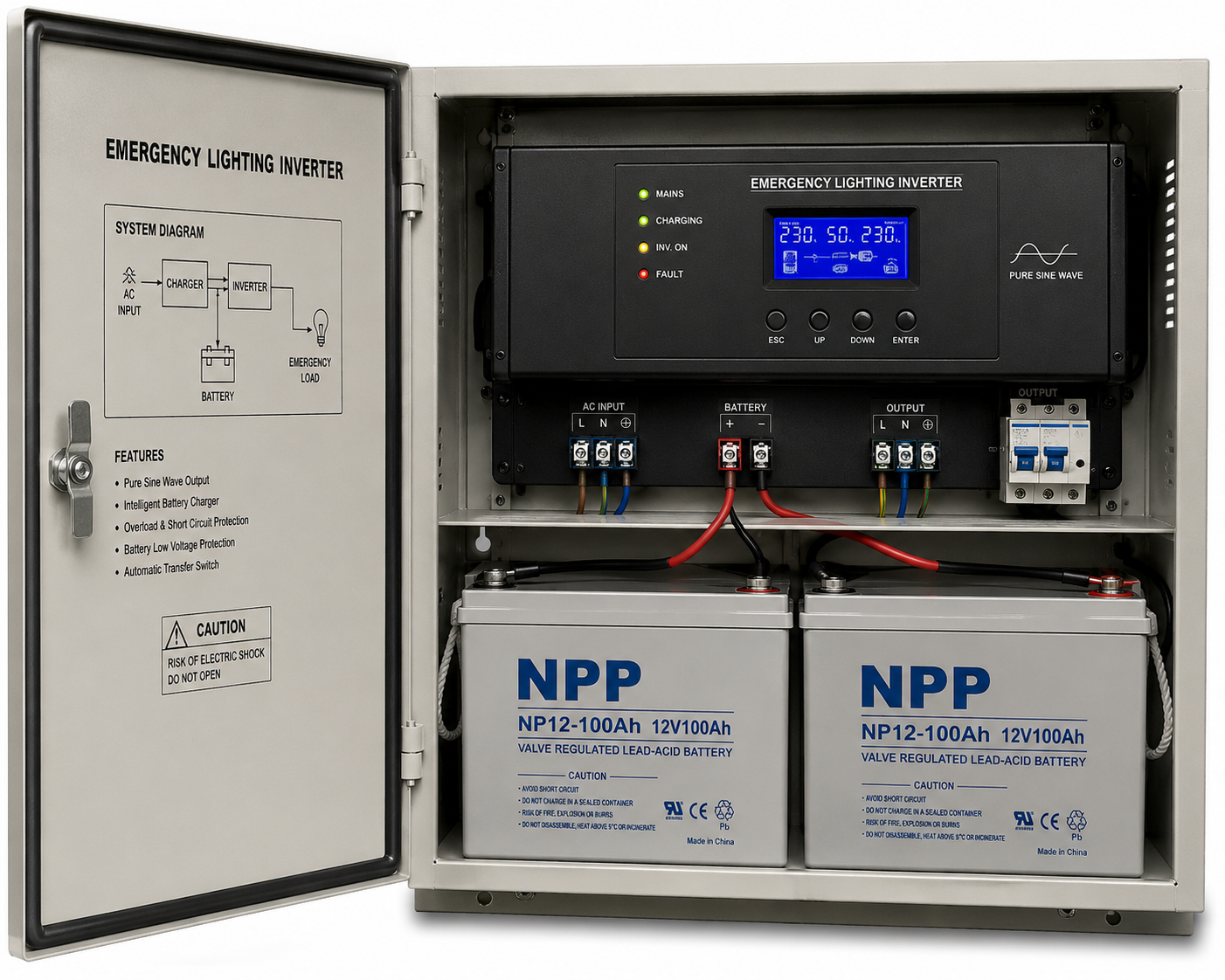
What Is a Lighting Inverter?
A lighting inverter is a backup power system designed to provide emergency power to lighting fixtures during utility power failures. These systems are commonly installed in commercial buildings, hospitals, schools, warehouses, airports, data centers, manufacturing facilities, and other critical infrastructures where emergency illumination is required by building codes.
Unlike a traditional UPS that supports computers and electronic equipment, lighting inverters are specifically engineered to power emergency lighting circuits, exit signs, and life-safety systems when normal utility power is interrupted.
Reliable battery backup is the heart of every lighting inverter system, making battery selection one of the most important factors in ensuring emergency preparedness.
How Does a Lighting Inverter Work?
A lighting inverter continuously monitors incoming AC utility power while keeping its battery bank fully charged.
Normal Operating Mode
During normal operation:
Emergency Operating Mode
When a power outage occurs:
Once utility power returns:
This transition happens automatically, often within milliseconds, ensuring uninterrupted emergency lighting operation.
Major Components of a Lighting Inverter System
The battery bank stores energy for emergency operation and is typically the most critical component of the system.
Popular battery technologies include:
The charger maintains the batteries at full capacity while preventing overcharging.
The inverter converts stored DC battery power into usable AC power for emergency lighting loads.
The transfer switch automatically changes power sources between utility power and battery backup.
Modern lighting inverters feature:
Why Batteries Are Critical for Lighting Inverters
Most emergency lighting systems are required to provide backup power for at least 90 minutes, although many installations require longer runtimes.
The battery bank directly impacts:
Poor battery performance can lead to emergency lighting failure during critical situations.
Major Lighting Inverter Manufacturers
Several manufacturers dominate the emergency lighting inverter market:
IOTA Engineering
A leading manufacturer of emergency lighting equipment and inverter solutions widely used in commercial facilities.
Myers Emergency Power Systems
Offers centralized emergency lighting inverter systems ranging from small commercial units to large industrial installations.
Eaton
Provides emergency lighting inverters and integrated life-safety power systems for commercial buildings.
ABB
Supplies power conversion and emergency backup systems for critical facilities worldwide.
Controlled Power Company
Manufactures lighting inverters and custom emergency power solutions.
Staco Energy Products
Known for large-scale emergency lighting and critical power systems.
Why Front Terminal Batteries Are Popular in Lighting Inverters
Front Terminal (FT) batteries have become increasingly popular for lighting inverter applications because of their compact footprint and simplified maintenance.
Advantages include:
Space-Saving Design
Front terminal batteries allow installers to maximize battery capacity while minimizing cabinet space.
Easy Maintenance
All terminals are accessible from the front, making inspections and replacements easier.
Long Service Life
Quality front terminal batteries often deliver:
Improved Installation Efficiency
Front-access connections reduce installation time and maintenance labor costs.
NPP Front Terminal Batteries for Lighting Inverters
NPP's Front Terminal battery series is specifically designed for standby power applications such as:
Popular NPP Front Terminal models include:
Key features include:
These batteries are ideal for large centralized lighting inverter systems where space utilization and ease of maintenance are critical.
NPP High Rate Batteries for Lighting Inverters
For lighting inverter systems requiring high discharge performance, NPP High Rate (HR) batteries provide an excellent solution.
High Rate batteries are engineered to deliver large amounts of power over shorter durations, making them particularly suitable for emergency lighting applications.
Popular NPP High Rate models include:
Benefits include:
High Discharge Capability
Designed to support sudden emergency loads during utility failures.
Flame Retardant Construction
FR models utilize UL-recognized flame-retardant battery cases.
Excellent UPS Compatibility
The same performance characteristics that make High Rate batteries ideal for UPS systems also make them excellent choices for lighting inverter applications.
Reliable Emergency Runtime
Provides stable voltage output throughout discharge cycles to support emergency lighting loads.
Choosing the Right Battery for a Lighting Inverter
When selecting batteries for a lighting inverter, consider:
Runtime Requirements
Determine whether the application requires:
Available Space
Front Terminal batteries often maximize capacity in compact installations.
Discharge Rate
High discharge applications may benefit from NPP High Rate battery technology.
Maintenance Accessibility
Front-access terminals significantly reduce maintenance complexity.
Design Life Expectations
Long-life AGM batteries reduce replacement frequency and total ownership costs.
Conclusion
Lighting inverters play a critical role in maintaining occupant safety during power outages. While the inverter electronics receive much attention, the battery bank ultimately determines whether the system performs when needed most.
NPP's Front Terminal and High Rate AGM battery series are trusted solutions for lighting inverter manufacturers, OEMs, contractors, and facility managers seeking reliable emergency backup power. With maintenance-free AGM technology, long service life, excellent discharge performance, and compact front-access designs, NPP batteries provide dependable power for emergency lighting systems in commercial, industrial, and institutional facilities worldwide.
Whether you are designing a new lighting inverter system or replacing aging batteries, NPP offers a comprehensive range of Front Terminal and High Rate battery solutions to meet your emergency lighting backup requirements.
For more information about NPP Lighting Inverter Battery Solutions, contact NPP Power today.
